“We are not trained in school about how we make meaning in photographs or read photographs yet we are doing it every day. As a culture we currently don’t have the skills to navigate that.”
Read More
“We are not trained in school about how we make meaning in photographs or read photographs yet we are doing it every day. As a culture we currently don’t have the skills to navigate that.”
Read MoreSavannah Dodd speaks with Alice Chautard at the University of Oxford’s REACH programme for water security on photography ethics in international development.
Read MoreBBC Correspondent Allan Little addresses the gulf between the reality of war and our ability to comprehend it from afar. He picks ups on Susan Sontag's essay on war photography.
Read MoreWhile turning the camera inward may alleviate ethical qualms about positionality, photographing the people closest to us is not without ethical considerations. Seven photographers discuss the ethics of working on stories close to home.
Read MoreThe famous photo agency has had to confront big questions about the role of its storied archive in the photo industry today.
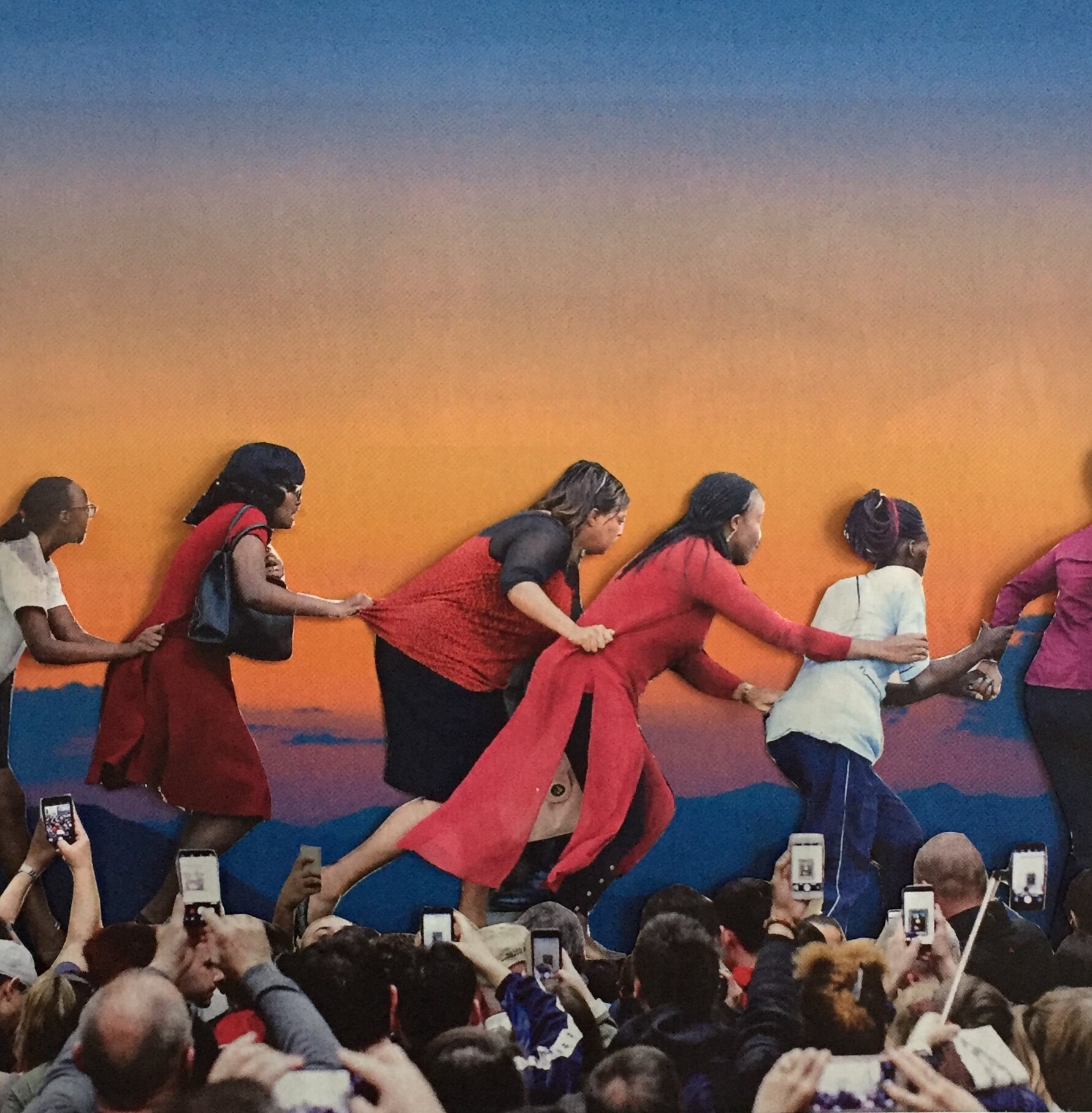
Read MoreWhat are the ethics of photographic collage? How can we navigate questions of authorship, (de)contextualisation, and aestheticization, especially when working with images of trauma?
Read MoreTheodore Roosevelt remarked that Curtis’ work was ‘has far more than mere accuracy, because it is truthful.’ But can truth be beyond accuracy? How far can we trust the objectivity of the photographer?
Read MoreSavannah Dodd has been named as one of the UK’s most 100 inspirational female entrepreneurs by Small Business Britain’s f:Entrepreneur ‘#ialso100’ campaign.
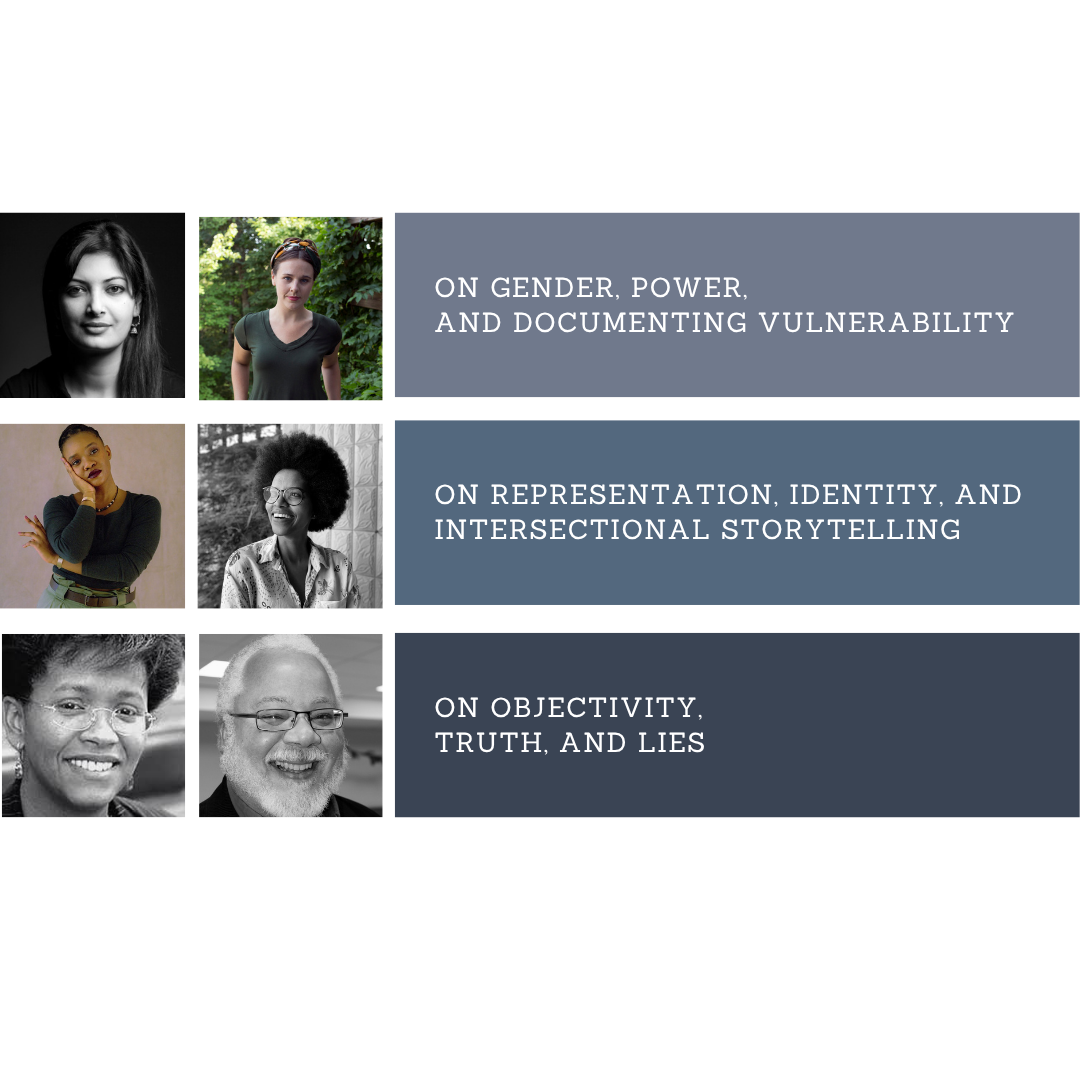
Read MoreThis year, due to the coronavirus pandemic, we moved the symposium online. Instead of one all-day event, we hosted a mini-series of events. We heard from Smita Sharma, Laura Saunders, Melissa Bunni Elian, Martha Tadesse, Jennie Ricketts, and John Edwin Mason.
These sessions were organised by the Photography Ethics Centre, and moderated by Savannah Dodd. This event was supported by the International Women’s Media Foundation’s Howard G. Buffett Fund for Women Journalists.
Read MoreThis year, due to the coronavirus pandemic, we moved the symposium online. Instead of one all-day event, we hosted a mini-series of events.
Our third panel panel took place on December 3. We heard from Jennie Ricketts and John Edwin Mason on objectivity, truth, and lies.
Read MoreAfter my podcast interview with Smita Sharma earlier this autumn, I wanted to learn more about her experience photographing “Stolen Lives: The harrowing story of two girls sold into sexual slavery” for National Geographic.
Read MoreThis year, due to the coronavirus pandemic, we moved the symposium online. Instead of one all-day event, we hosted a mini-series of events.
Our second panel took place on November 5. We heard from Melissa Bunni Elian and Martha Tadesse on representation, identity, and intersectional storytelling.
Read MoreThis year, due to the coronavirus pandemic, we moved the symposium online. Instead of one all-day event, we hosted a mini-series of events.
At first our panel event on October 1, 2020, we heard from Smita Sharma and Laura Saunders on gender, power, and documenting vulnerability.
Read MoreLong overdue, we can finally begin to confront issues of bias, morality, and principle that have long infiltrated the medium by many of its most prominent practitioners.
Read MoreThis new podcast series is all about the ethics of photography. Through weekly conversations with accomplished photographers, we will cover topics like consent, dignity, power, responsibility, impact, and collaboration, among many others.
Read MoreThe collective movement toward a more considered practice that puts an emphasis on respect, safety, and sensitivity toward the people in our images may feel threatening when we reflect on our past practice.
Read MoreThis episode of the Great Creators Podcast is about design, innovation and research in the Creative Industries and features indie games company Brain & Nerd’s Tina Lauro Pollock and founder of The Photography Ethics Centre Savannah Dodd.
Read MoreOctober 22, 2020
Read MoreOver the course of the coronavirus pandemic so far, there have been many questions raised about what it means to visually represent a public health crisis ethically: What kinds of visual stories do we need?
Read More