
Photographs and Consequences: The Photography Ethics Card Game
The World Economic Forum’s Global Risks Report 2025 identifies misinformation and disinformation as the most significant short-term global threat. At the same time, visual media — particularly images circulating through digital platforms — has become a powerful vehicle for spreading misleading information.
Despite this shift toward image-driven communication, educational debates often emphasize technological developments rather than the critical skills needed to interpret and evaluate visual media. Visual literacy education, which encourages critical reflection on the ethics of image creation, production, and dissemination, offers a promising response. However, educators currently have limited pedagogical tools for teaching visual ethics.
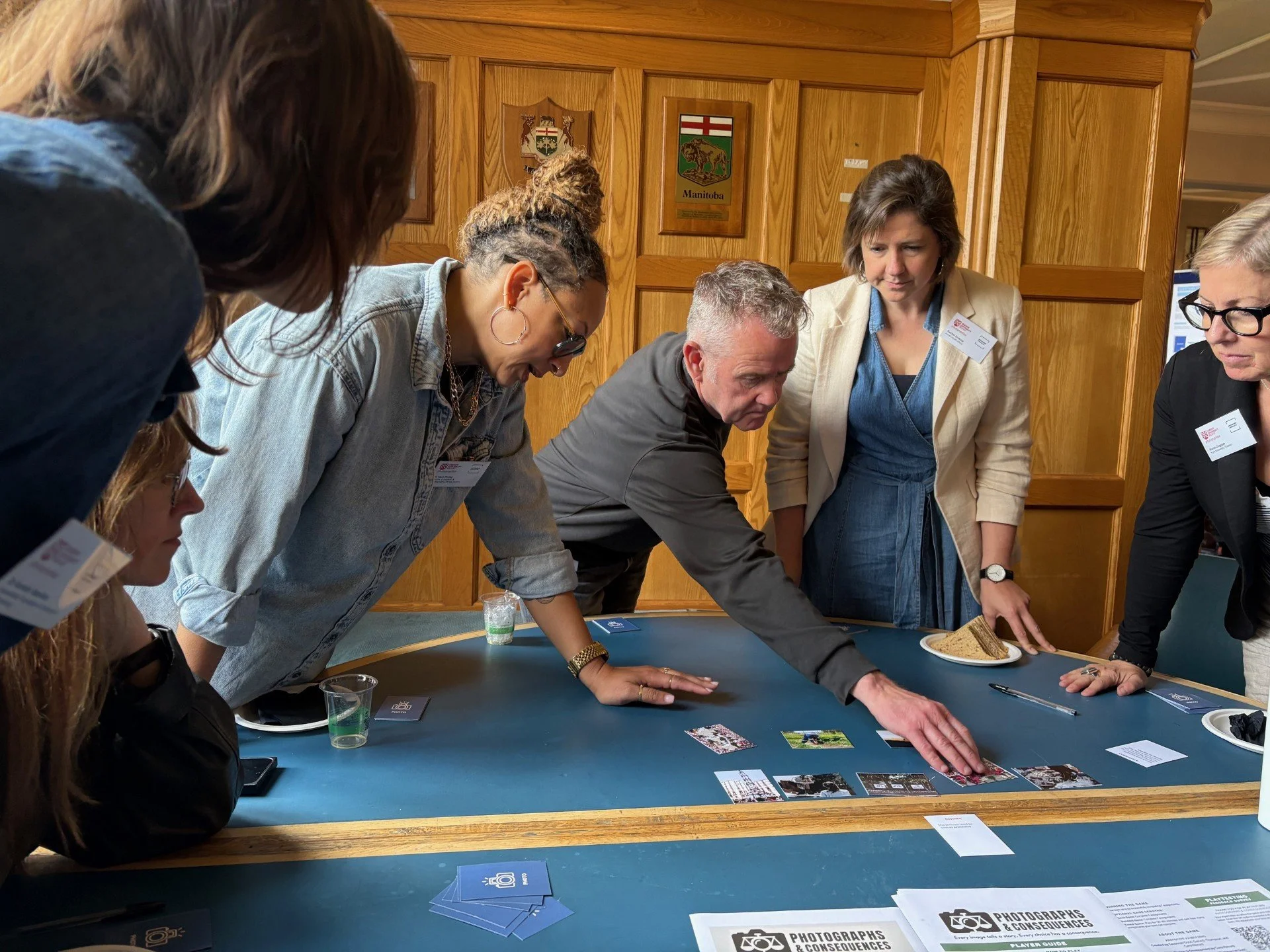
Dr Savannah Dodd (Queen’s University Belfast and Photography Ethics Centre), Dana Statton Thompson (Murray State University and the International Visual Literacy Association), and Carol Record (Upper Iowa University and Blackwater Buccaneers) have come together to answer the question: Can students develop visual and ethical literacy by playing a tabletop card game? They have approached this question by, first, designing a card game to teach visual ethics, led by game designer Carol Record. Second, by piloting the card game in university classrooms, working together with lecturers Cintia Figueroa (Murray State University), Anthony Luvera (Coventry University), Dr Tara Mortensen (University of South Carolina), and Dr Tara Pixley (Temple University).
The Game
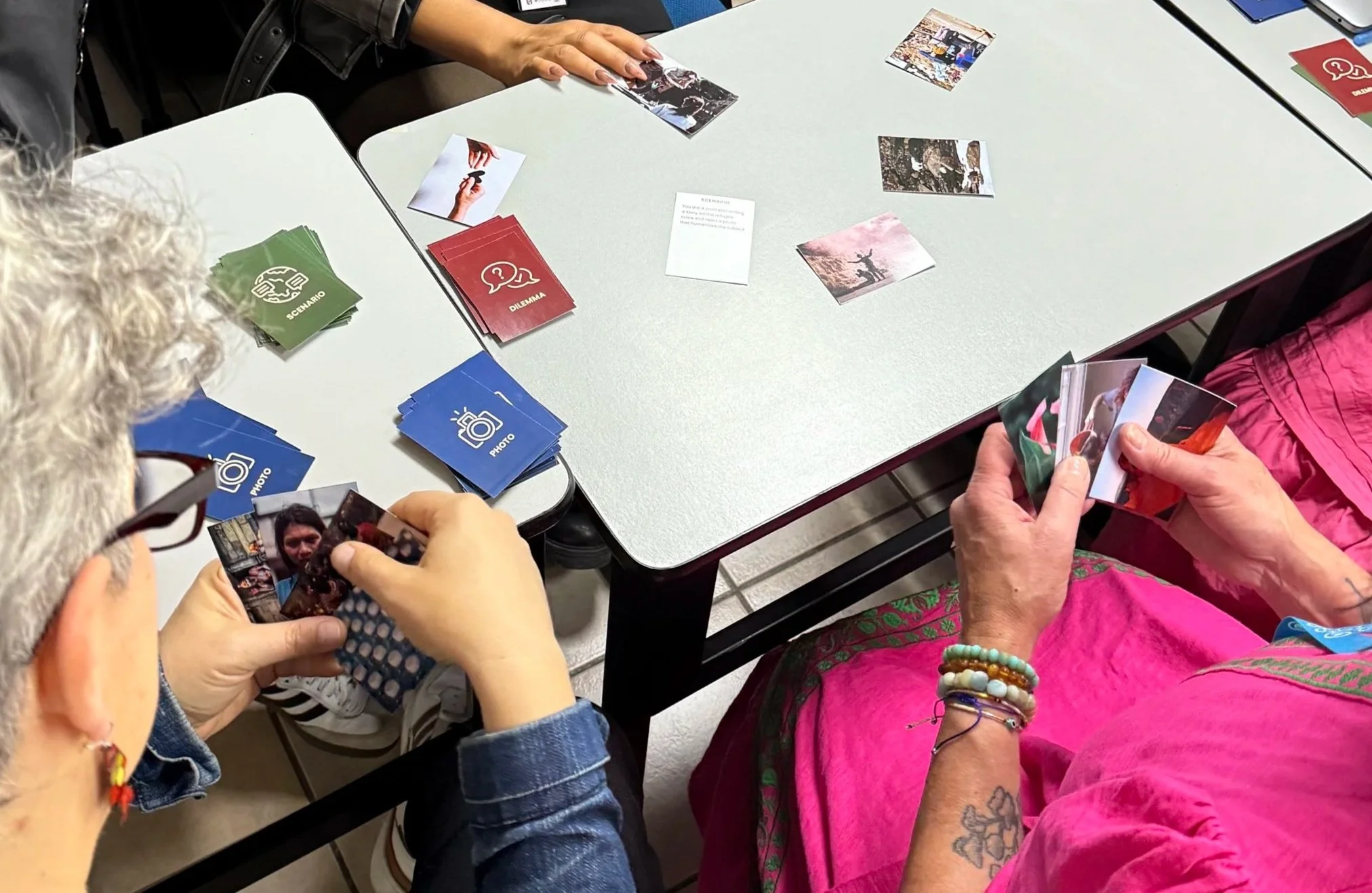
Photographs & Consequences is created to spark meaningful conversations about the ethical complexities of visual media. This game challenges players to think critically about how images are used, interpreted, and shared in different contexts, encouraging thoughtful decision-making through real-world scenarios. By integrating elements of game-based learning with visual literacy education, our goal is to provide an engaging and interactive way for students, educators, and professionals to explore the ethical dimensions of photography and media.
Through engaging scenarios and discussions, players critically analyze how images are captured, used, and shared, considering issues such as consent, manipulation, and context. The goal is to develop a deeper understanding of visual ethics while exploring different perspectives in a fun and interactive way. In the game, images are used to deepen students' understanding of shared human experiences. These images contain complex meanings and are meant to provoke profound emotional responses in the player, all while dealing with scenarios in an ethical manner.
The Research
Using a mixed-methods approach — including participant observation during gameplay, student surveys, and lecturer focus groups — the research evaluates the game’s effectiveness as a teaching tool. Findings aim to expand game-based learning strategies and support visual literacy education across disciplines and educational levels.
Results are forthcoming, but preliminary findings have been presented at the International Visual Literacy Association’s Annual Conference (2025) and at the Photography Ethics Symposium (2026).
Next Steps
If you would like to learn more about the game, learn about how it could be applied at your institution, or enquire about purchasing the game, you can reach out to Savannah at savannah@photoethics.org.
NB: This project received funding from the International Visual Literacy Association (IVLA)